
The Gap Between Potential
and Performance.
Every upstream operation has a gap between its actual production and its technical potential. Identifying that gap — and closing it systematically — requires more than daily production reports and periodic well tests. It requires an integrated analytical environment where reservoir data, well performance models, flow assurance calculations, and intervention workflows coexist and interact.
For most operators, these disciplines are siloed across different tools, different teams, and different data systems. Engineering time is consumed by data preparation, model building, and manual reconciliation — leaving little capacity for the decision-making that actually drives production.
Optima's Production Optimisation & Flow Assurance module changes that. It brings the full analytical workflow — from PVT modelling to pipeline bottleneck identification — into the Digital Oilfield platform your operations team already uses every day.
Eight Integrated Capability Areas
- Decline Curve Analysis.. 01
- Water Cut Prediction 02
- Well Candidate Selection 03
- Nodal Analysis.. 04
- Pipeline Network.. 05
- Hydrate Prediction.. 06
- Transient Flow Analysis.. 07
- Mechanical Integrity.. 08

Decline Curve Analysis & Production Forecasting
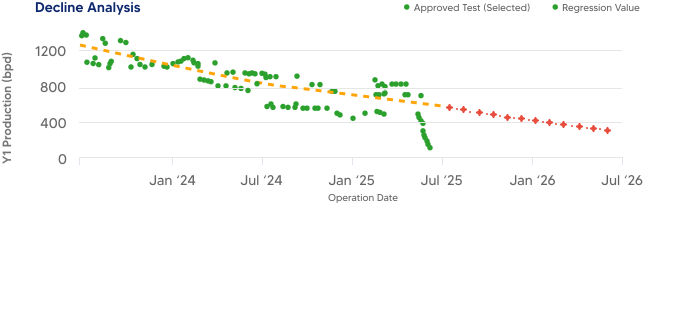
Real-time monitoring of oil production at well, cluster, and field level. Analyse and predict production decline using exponential, hyperbolic, and harmonic models — enhanced with physics-based and machine learning approaches. Historical case studies support periodic reviews, technical validation, and the preparation of forecast reports. Automatically detect patterns and critical events such as accelerated decline, trend breaks, and anomalous GOR or water cut behaviour.

Water Cut Prediction
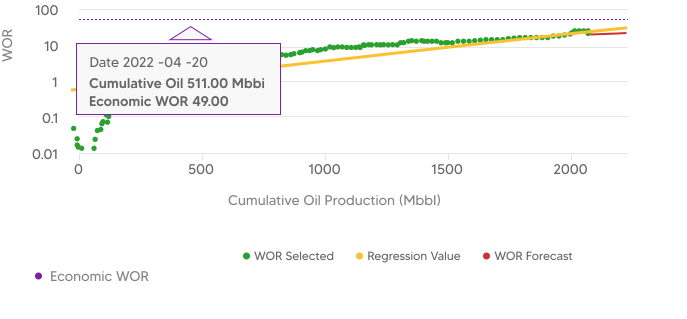
Monitor and predict water cut behaviour using Oil Cut and WOR methods (Chan and others), enhanced with physics-based and data-driven models. Estimate recoverable reserves and recovery factor up to a user-defined maximum economic water cut — supporting production scenario planning and intervention timing decisions.

Well Candidate Selection
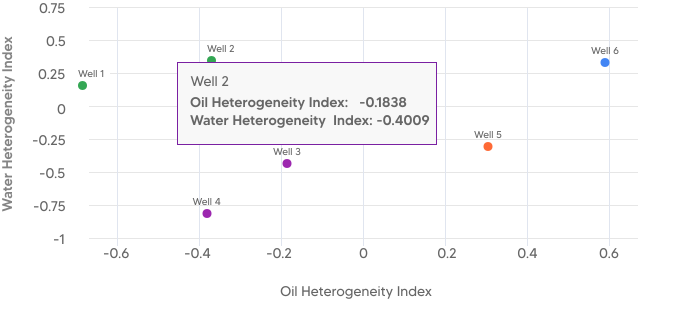
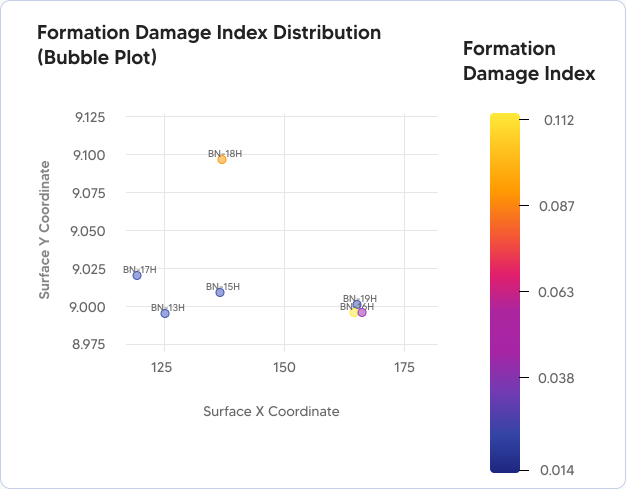
Identify the highest-value candidates for workovers, recompletions, pump replacements, or other interventions — combining production performance data, reliability metrics, and operating costs. Physics-informed models, machine learning, and big data analytics are complemented by advanced methods including Yang's logic fuzzy model, formation damage index, and cluster analysis with PCA. Evaluate at field or block level, create case studies to store and compare results over time.
_0.svg)
Nodal Analysis (Integrated Well Performance Modelling)
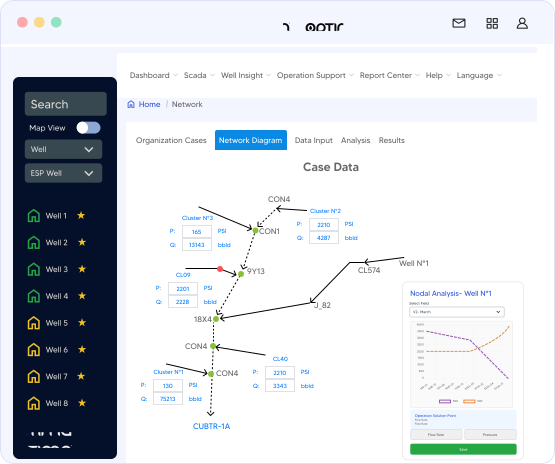
A fully integrated nodal analysis environment covering PVT properties, reservoir inflow models, completion configurations, wellbore hydraulics, and surface networks. Supported reservoir models include Darcy, Vogel, Jones, transient flow, back pressure, fractured wells, and horizontal well correlations (Joshi, Giger, Economides). Completion options include open hole, cased perforations, stable perforations, and gravel pack configurations. Wellbore models include MONA, Mukherjee & Brill, Beggs and Brill, and Ansari Mechanistic. Choke performance, hydrate formation, and wax deposition are also integrated into the nodal framework.
_1.svg)

Pipeline Network & Bottleneck Analysis
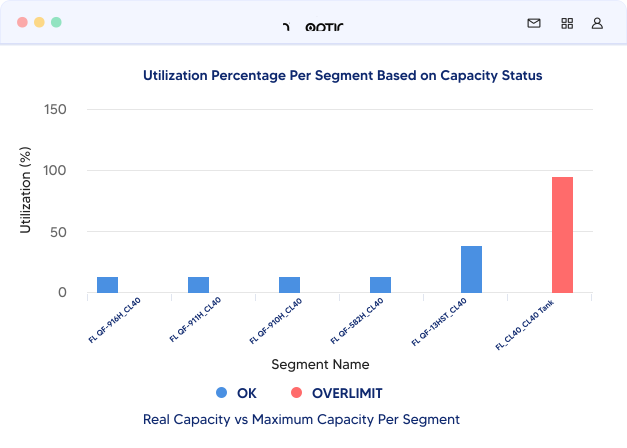
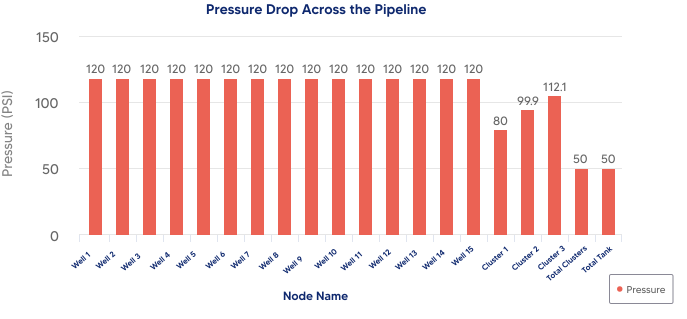
Model the complete pipeline network from source nodes to delivery points. Apply hydraulic correlations and operating constraints to estimate pressure losses and flow distribution across segments. Identify bottlenecks and capacity limitations before they constrain production. Output includes estimated flow and pressure by node, pressure drop by segment, critical velocity, severity index, and utilisation percentage.

Hydrate Prediction & Flow Assurance
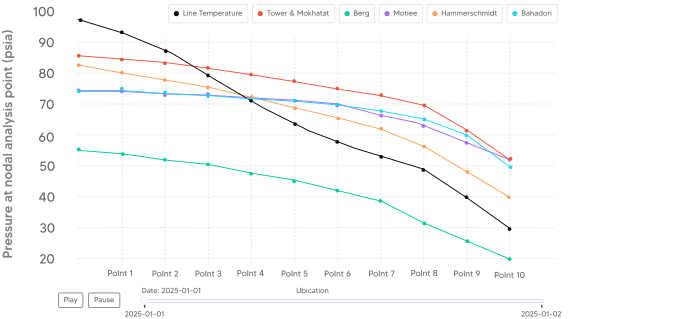
Assess hydrate formation risk along the pipeline system using seven industry correlations — Makongo, Hammerschmidt, Oestergaard, Tower & Mokhatat, Berg, Mottie, and Bahadori. Evaluate pressure-temperature safety margins at each segment and generate preventive alerts before conditions approach the hydrate formation envelope. Wax deposition analysis is also integrated, estimating deposition thickness over time.

Transient Flow Analysis & Leak Detection
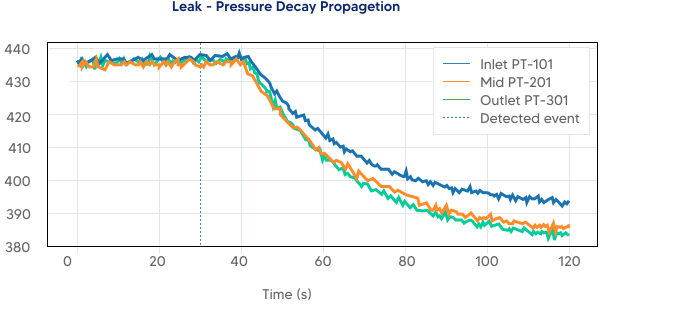
Automatically detect water hammer events, leak signatures, and flow restrictions from real-time SCADA data. Identify the event onset, estimate the most probable origin location in the network, and generate severity-based alerts for rapid operational response — without manual analysis or specialist software outside the Optima environment.

Mechanical Integrity & Corrosion Prediction
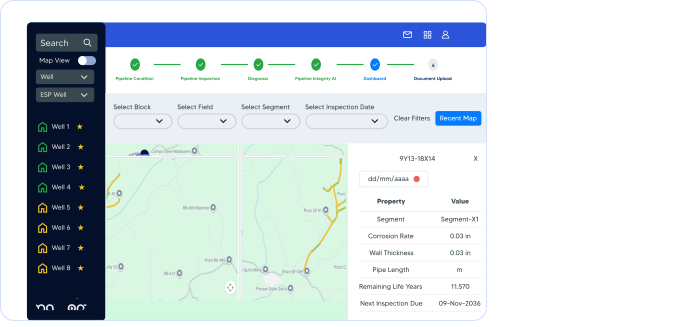
Manage pipeline and facility mechanical integrity using inspection and operating data. Calculate wall thickness, Maximum Allowable Operating Pressure (MAOP), and corrosion trend rates. Estimate remaining life and next inspection dates based on operating conditions. AI models predict corrosion behaviour and risk evolution — integrating inspection records, operating data, and chemical treatment history to generate proactive alerts and support risk-based maintenance planning.

ESP Optimisation
Nodal analysis integrating ESP performance curves, frequency sensitivity, pump intake and discharge conditions — with real-time calibration against SCADA data.

Sucker Rod Pump (SRP) Optimisation
Full SRP nodal framework covering rod string design, pump fillage, stroke and speed sensitivity, load analysis, and production response modelling.

Gas Lift Optimisation
Gas lift design and nodal analysis — optimising injection depth, rate, valve configuration, and gas availability for maximum lift efficiency and well deliverability.

PCP Optimisation
Progressive Cavity Pump (PCP) performance modelling — predicting production response at different speeds with nodal analysis integration.
What Production
Optimisation & Flow Assurance Delivers
- Close the gap between actual production and technical potential — systematically and continuously.
- Identify the highest-value workover and intervention candidates before competitors do.
- Protect pipeline infrastructure from hydrate, wax, corrosion, and transient flow risk.
- Reduce engineer time spent on model preparation by integrating all analytical tools in one platform.
- Support reserves estimation and production forecasting with auditable, traceable case studies.
- Plan artificial lift strategy with confidence — using physics-based models calibrated to your actual well conditions.
Connected to the Full
Digital Oilfield


Production Surveillance
real-time monitoring feeds live data into optimisation models


Artificial Lift Lifecycle
ALS diagnostics and equipment history inform nodal analysis inputs


Field Automation & Monitoring
SCADA data provides continuous calibration for flow assurance models


Digital Twin
scenario simulation connects to optimisation outputs for risk-free 'what-if' testing
Close the gap between
your wells' actual and potential performance.
Speak with our production and reservoir engineering team. We will show you how Optima's Production Optimisation & Flow Assurance module can be applied to your specific field conditions, lift types, and production challenges.