

The Knowledge That Runs Your Oilfield Lives in People's Heads. That is a Risk.
Upstream operations accumulate decades of hard-won operational knowledge — which wells respond to which interventions, which equipment configurations deliver the best run life in specific conditions, which operating procedures prevent the failures that cost the most. In most organisations, that knowledge lives in the experience of individual engineers and operators rather than in a system where it can be accessed, applied, and built upon.
When experienced personnel leave, that knowledge leaves with them. When a new operator is onboarded, there is no structured way to transfer it. When the same equipment failure occurs for the fourth time on the same well, there is no system that connects this event to the three previous occurrences and the lessons that should have been learned from them.
Optima's Knowledge Hub solves this — systematically, within the same Digital Oilfield platform that your team uses for daily operations.
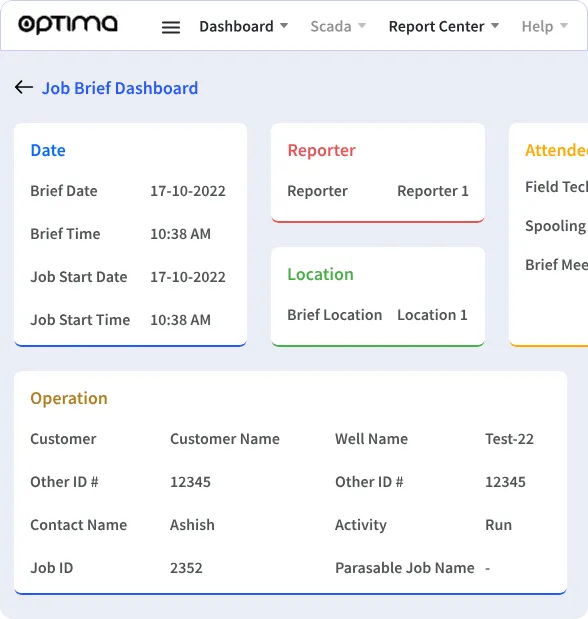
Five Capability Areas.
One Connected Knowledge Environment.
- Operator Training..01
- Document & Asset Knowledge.. 02
- SOPs, Procedures & Lessons.. 03
- Fleet & Route Management 04
- Quality, HSE & Event.. 05

Operator Training & Certification Management
Creates and manages structured operator training programmes — aligned with competency frameworks and HSE requirements.Tracks certification status, renewal dates, and qualification levels for every operator in the organisation.
Automated alerts for upcoming certification expirations and identified competency gaps — before they become compliance issues.Maintains complete training records for regulatory audit readiness and internal governance.
Integrates with the Digital Twin Operator Training Station — enabling simulation-based competency development within the same platform.Generates competency gap reports and training completion dashboards for HSE and operations management.

Document & Asset Knowledge Management
Centralised repository for all technical documentation — equipment manuals, design specifications, installation records, and operational procedures.
Role-based access control ensures the right people have access to the right documents — in the field, in the office, or on mobile devices. Version control and document lifecycle management — preventing outdated procedures from being used in the field.
Searchable knowledge base with metadata tagging for fast retrieval in operational situations.
Connects asset records to operational history — linking a piece of equipment's documentation to its real-world performance and maintenance history.

SOPs, Procedures & Lessons Learned
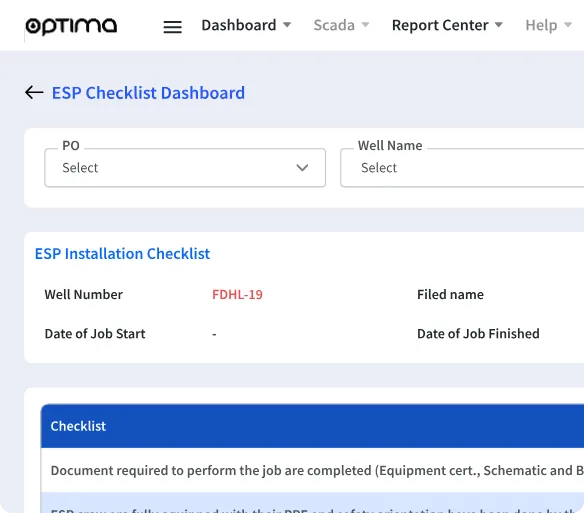
Lessons-learned database: structured capture of operational insights from well interventions, equipment failures, and process changes — ensuring each experience contributes to future performance.
Detects: natural flowing, normal operation, lack of supply liquid, severe liquid starvation, gas lock, gas interference, tubing leak, fluid pound, travelling valve leak, standing valve leak, broken sucker rod, stuck rod pump, and offline conditions.
DIFA (Disassembly, Inspection, Failure Analysis) knowledge base: failure analysis records with visual evidence, metallographic results, and root cause classifications — connecting equipment teardown data to design improvement and procurement decisions.
Supports continuous improvement cycles: as new failure data accumulates, SOPs and equipment specifications are updated to reflect current best practices.
Fleet & Route Management
Tracks field vehicles, equipment transport, and logistics associated with workover and intervention activities.
Route planning and scheduling for field teams — optimising travel time and resource allocation across well locations.
Asset tracking across locations: distinguishes equipment in-well, in transit, in the repair centre, and in inventory — reducing the search time that delays planned interventions.
Integrates with Artificial Lift Lifecycle Management for coordinated equipment mobilisation and job scheduling.
Quality, HSE & Event Management
Structured capture and management of HSE events, near-misses, and quality observations across operations.
Tracks event status, investigation progress, corrective actions, and close-out — with accountability and timeline visibility.
Generates HSE performance KPIs and compliance reports for management review and regulatory submission.
Connects HSE event data to operational context — enabling analysis of the conditions and workflows associated with safety incidents.
Knowledge Is Only
Valuable When It's
Connected to Operations.
The Knowledge Hub is not a standalone document management system sitting alongside your operational platform. In Optima, it is an integrated layer of the Digital Oilfield — connected to asset data, operational history, ALS lifecycle records, and the Digital Twin training environment.
When an engineer investigates a well anomaly, the Knowledge Hub surfaces the relevant SOPs, historical failure records, and DIFA data for that well's equipment. When an operator is training on the Digital Twin, their certification progress is recorded in the Knowledge Hub. When an ESP is pulled and a DIFA is conducted, the result feeds the knowledge base that informs the next equipment selection decision.
What the
Knowledge Hub Delivers.


Retained Institutional Knowledge
Critical operational knowledge is captured in the system — not stored in individual engineers' experience. It remains accessible when key personnel change roles or leave the organisation.


HSE Compliance Without Overhead
Certification tracking, event management, and procedure management replace disconnected spreadsheets and paper records — reducing the administrative burden of compliance without reducing its rigour.


Faster Troubleshooting
Engineers investigating a problem have immediate access to historical failure records, SOPs, equipment specifications, and DIFA data for the relevant asset — reducing diagnosis time and improving the quality of intervention decisions.


Continuous Improvement Cycle
Every intervention, failure, and DIFA feeds the knowledge base that informs the next decision — creating a structured cycle of operational learning that compounds in value over time.
Build a Digital Oilfield
that learns from every well, every failure, every day.
Talk to our team and discover how Optima's Knowledge Hub can be integrated with your existing operational workflows — capturing the expertise your organisation has accumulated and making it accessible where and when it matters most.